
Kreate begins construction of the new Koskela Depot using state-of-the-art precast track slabs

Kreate is constructing the track, electrified track, and technical systems for the Koskela depot project. Inside the halls, work is progressing from earthworks to the track bed and fixed track construction. Floor works will follow once the track installation is complete. The first sections of the hall are expected to be completed in the summer of 2026.
At the new Koskela tram depot in Helsinki, construction has now reached a key milestone as the installation of tracks inside the depot halls begins on top of the pile slab. In the project alliance, Kreate serves as a partner to the lead contractor, Skanska, and is responsible for the depot’s track and electrification works, the points control system, and circular economy solutions.
Kreate is delivering more than 5,300 metres of track and 50 points, including all structural layers from the sleeper slab upwards. The company’s scope covers the full track structure within the depot, supporting the development of one of Helsinki’s most significant public transport infrastructure projects.
Track construction is progressing in stages
Before the first rails can be installed, extensive infrastructure work must be completed on top of the pile slab. This includes the installation of building services routes and penetrations, such as cable protection conduits, cabling for traction power and technical systems, as well as drainage and dewatering solutions.
To date, almost 2,000 metres of line drainage channels and cable protection pipes have been installed along the track beds, while approximately 40,000 metres of sewers are being laid. Once these works are completed, the track beds and other structural layers can be constructed, providing the foundation for the installation of the actual track structure.
Track construction by Kreate began in March, and by the end of the month the first rails had already been laid inside the hall.
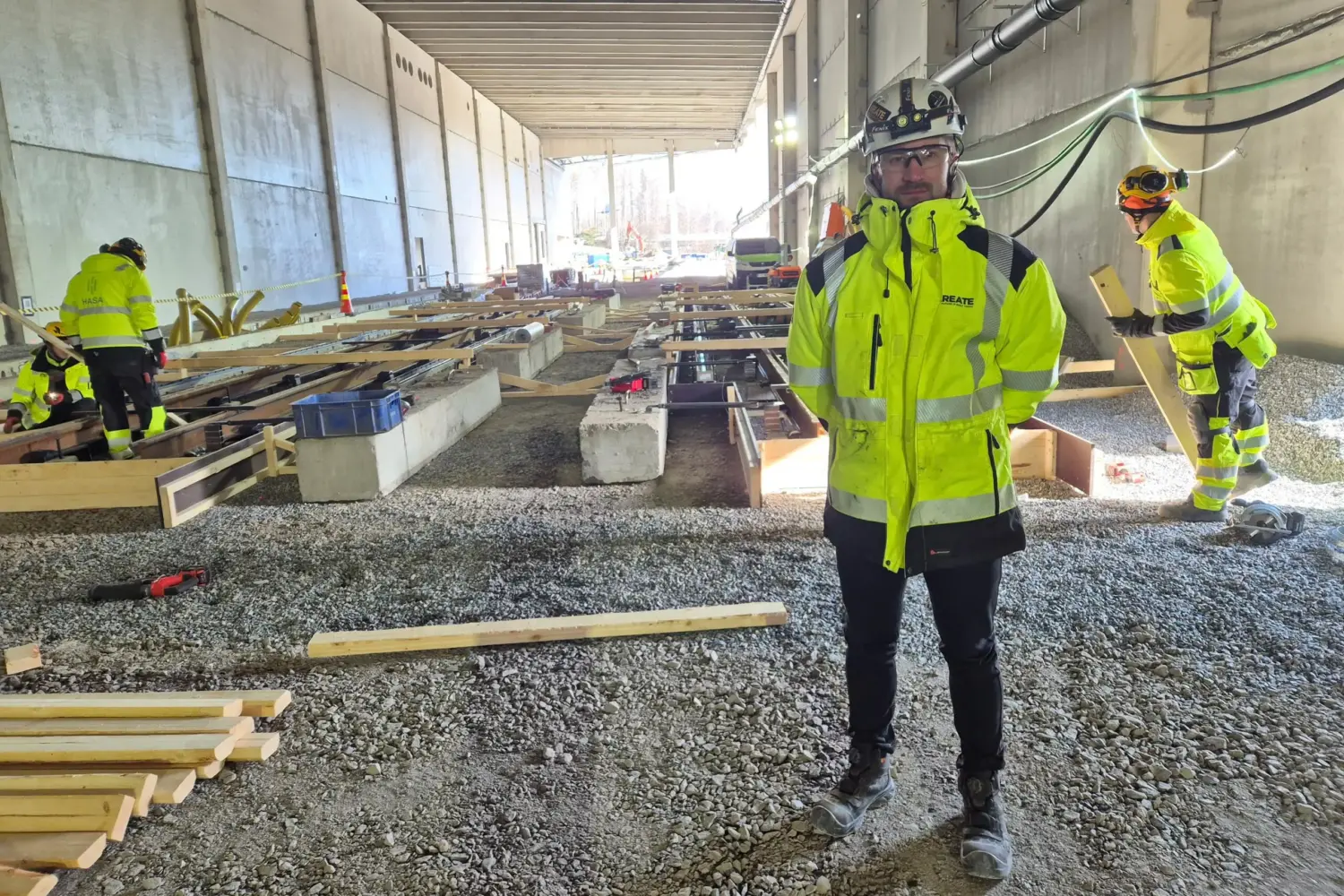
“The sequencing of Kreate’s work proceeds in such a way that the infrastructure work is always ahead, followed by the track, and then the flooring work. This means that the coordination of our own work is particularly important, as many stages of the project are carried out simultaneously within a small area. The tight overlap between tasks also requires careful advance planning, which is reflected not only in the schedule but also, positively, in quality and safety,” says Mikko Koponen, Site Manager at Kreate.
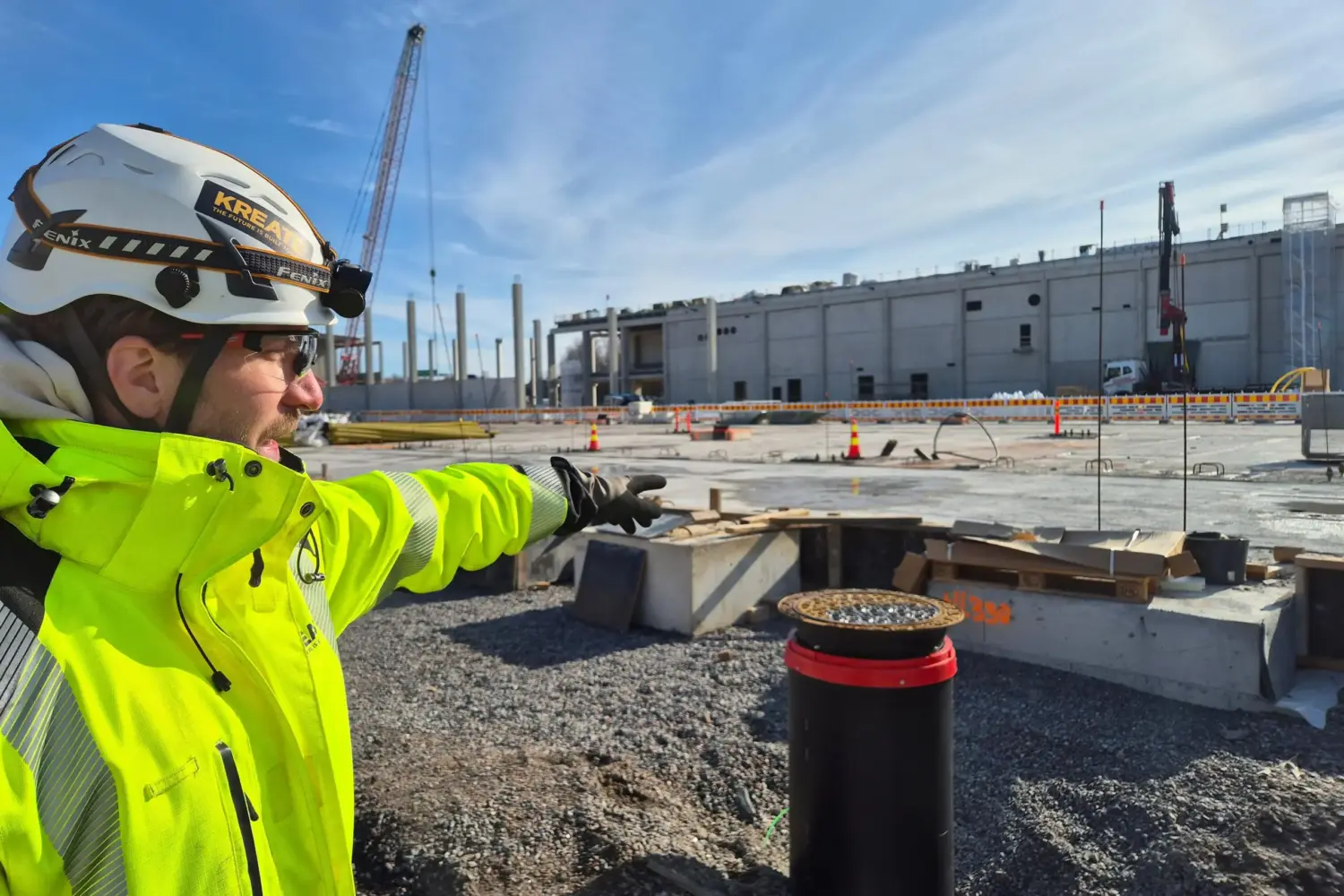
The first floor pours are scheduled to take place in the spring, and the halls will be handed over in phases. From Kreate’s perspective, the first section of the hall is expected to be completed during the summer.
After this milestone, earthworks and track construction will continue in the remaining halls through to spring 2027. Track installation in the outdoor areas of the depot will be carried out towards the end of the project, once the heaviest site logistics operations have been completed.
A new rail fastening system, developed and optimised as part of the project, is helping to revolutionise track construction
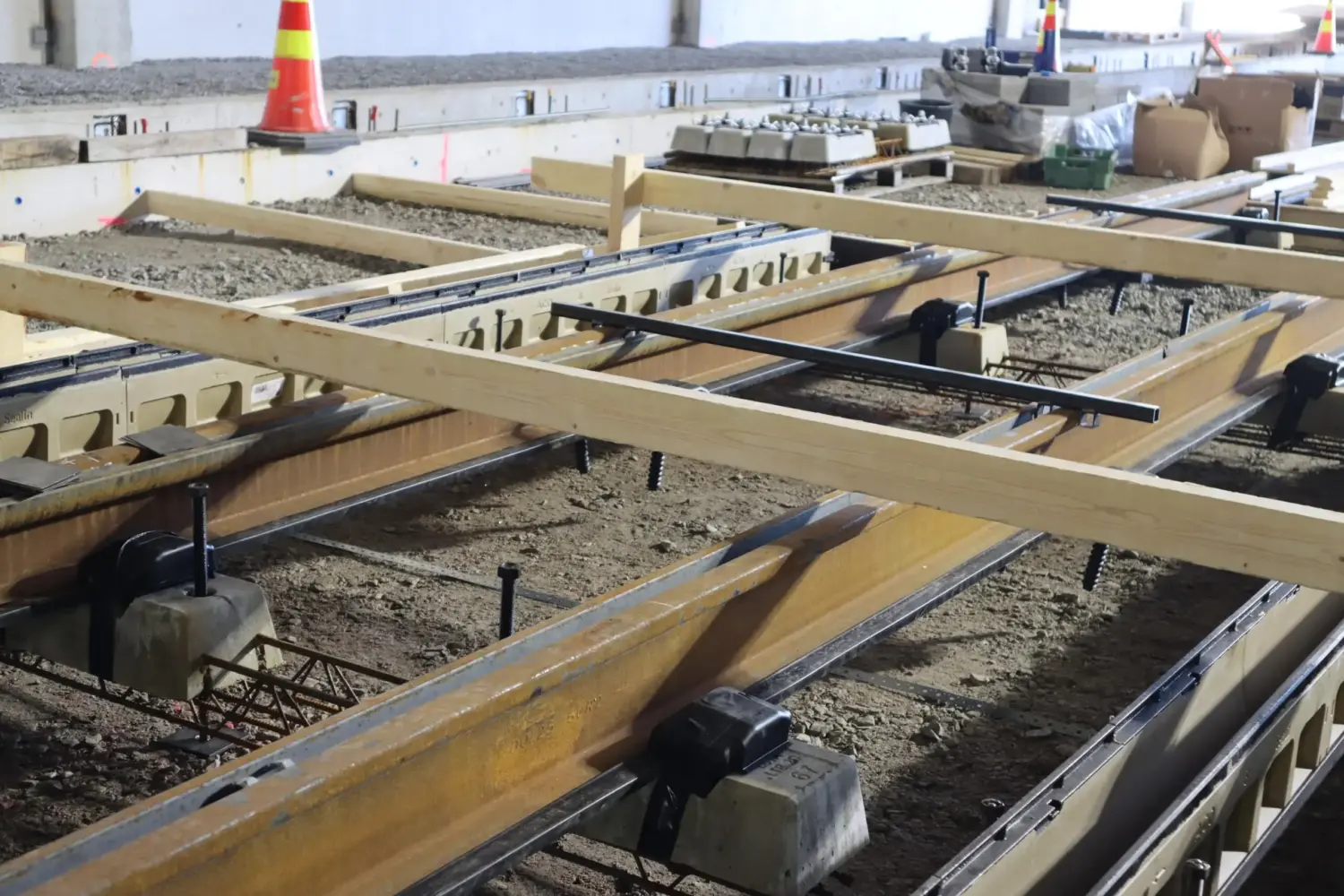
As part of the project, all depot tracks will be built using state-of-the-art precast track slabs. Thanks to thorough planning and preparation, the solution is expected to enable a smooth and efficient construction process.
The fixed-track slab design, developed and optimised during the project, represents cutting-edge innovation within the sector. Through structural optimisation, it has been possible to significantly reduce the use of concrete while still meeting the depot’s strict quality requirements and ambitious low-carbon targets.
“The new fastening method, developed in collaboration with the client, also opens up opportunities to make extensive use of the solution in future tramway projects,” says Koponen.
The innovation has already delivered tangible results. The project has enabled the replacement of approximately 3,000 concrete sleepers with lighter loose fastenings, marking a significant step towards a more efficient and sustainable rail infrastructure.
“The Koskela depot is an excellent example of seamless cooperation between Kreate’s units. Although the demolition work and the track construction did not take place at the same time, we have been able to draw on the expertise of both units during the design and scheduling phases. The circular economy unit’s in-depth expertise, for example in relation to material collection points, has also brought significant added value to the implementation of the project,” says Veli-Matti Aaltonen, Kreate’s Project Manager for the Koskela depot project.
The large size of the new depot poses a logistical challenge
The conditions at the construction site make the track works exceptionally demanding. Construction is taking place in a densely built-up urban environment, while multiple work phases are being carried out simultaneously across the site. This creates strict logistical requirements, with materials delivered through designated routes and according to carefully coordinated schedules.
“The idea of ‘the right amount, at the right time and in the right place’ is emphasised in our day-to-day work,” Koponen explains.
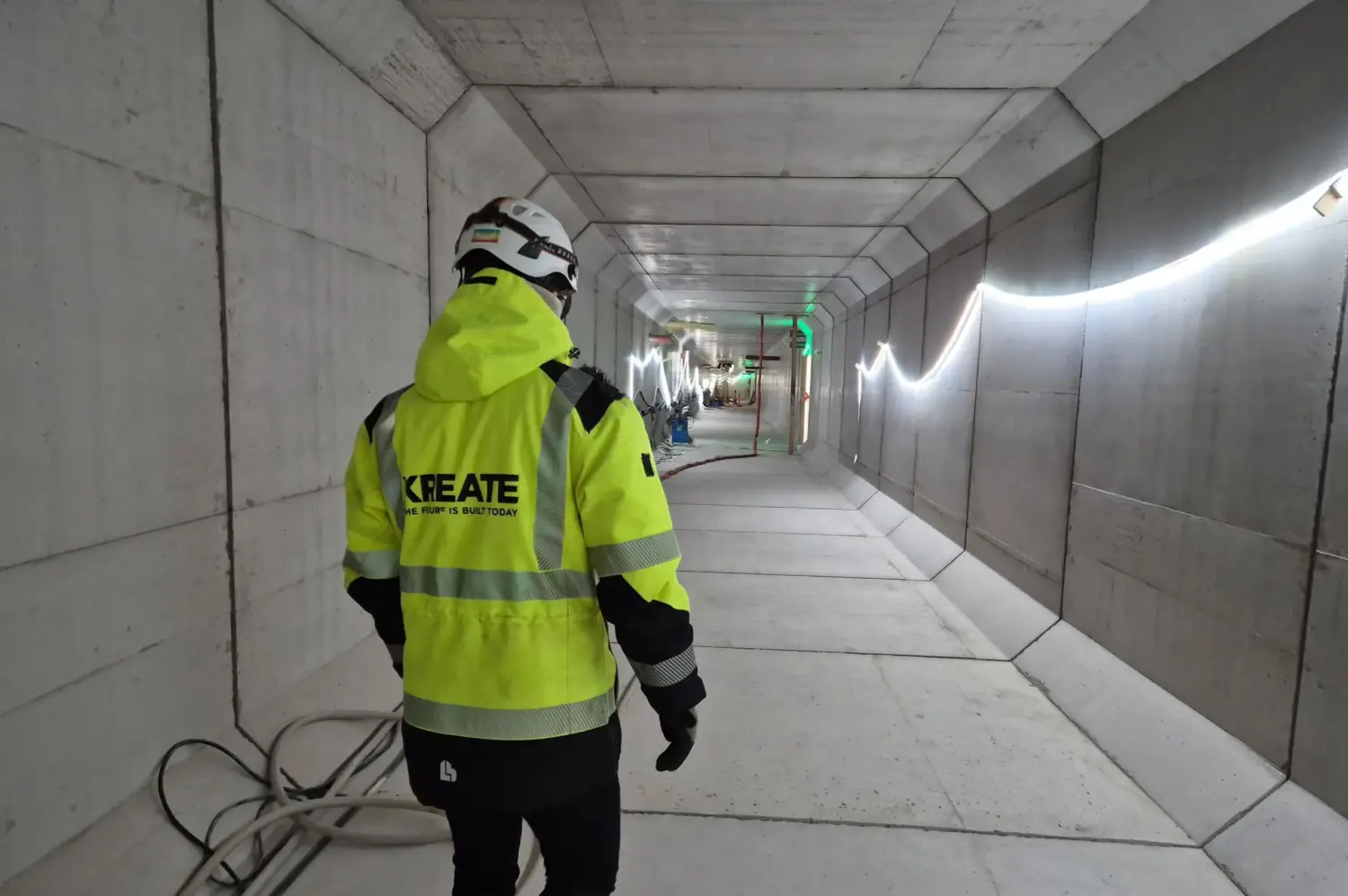
Both the design and implementation phases incorporate solutions that enable building services and track infrastructure to be coordinated within confined spaces. One example is the use of tunnels that serve as technical routes throughout the depot area, helping to efficiently integrate systems while maintaining the functionality of the track layout.
As well as railways, Kreate also brings expertise in electric railway works and the circular economy to the project
In addition to track construction, Kreate’s scope includes a significant electrified track component. This covers the installation of the depot’s catenary system, DC power equipment for both depot and line power supply, as well as the supply and return current cabling and track circuit control systems.
The work is closely integrated with the installation of other technical systems. Tracks and traction power systems are completed hall by hall, enabling the technical systems and traction power supply to be tested and commissioned together as one fully integrated system during the commissioning phase.
At the construction site, Kreate’s responsibilities combine traditional rail infrastructure works with specialist engineering expertise.
“Some of the support equipment and implementation solutions are manufactured and adapted specifically for the site. This ensures that the rail structures, drainage channels and service routes can be installed in the hall areas in accordance with the plans, while also enabling the work to be carried out efficiently and on schedule,” explains Mikko Koponen.
Kreate’s expertise in the circular economy has also played a key role in the project, even before track construction began. The company’s contract included the demolition of the old Koskela depot and the maximisation of material reuse. Concrete from the demolished structures was crushed on site and reused in the new structural layers, while retaining the foundations of the old building reduced the number of new piles required.
These solutions are aimed at reducing the project’s carbon footprint and supporting the environmental objectives set for the depot project.
Once completed, the new Koskela depot will support Helsinki’s growing tram network alongside the Ruskeasuo depot. The depot is scheduled to enter service in 2029, although the project timetable has advanced significantly and, based on current information, completion is now expected as early as the end of 2028.
The Akseli consortium consists of Helsinki Metropolitan Area Public Transport, lead contractor Skanska, and the design partners Sweco, Rejlers and Arkkitehtityöhuone APRT.