Kreate is moving into the implementation phase of the Junatie metro bridge renovation project – Innovative solutions will shorten metro service interruptions and minimize disruptions
Infrastructure contractor Kreate and Helsinki Metropolitan Area Transport have signed an agreement regarding the implementation phase of the Junatie metro bridge renovation project. Kreate has added a contract worth 60 million euros to its second-quarter order book. The innovative implementation solutions designed during the development phase will significantly reduce the duration of the metro service disruption and minimize the impact on passengers, the environment, and the Redi shopping centre. Construction will begin in June 2026.
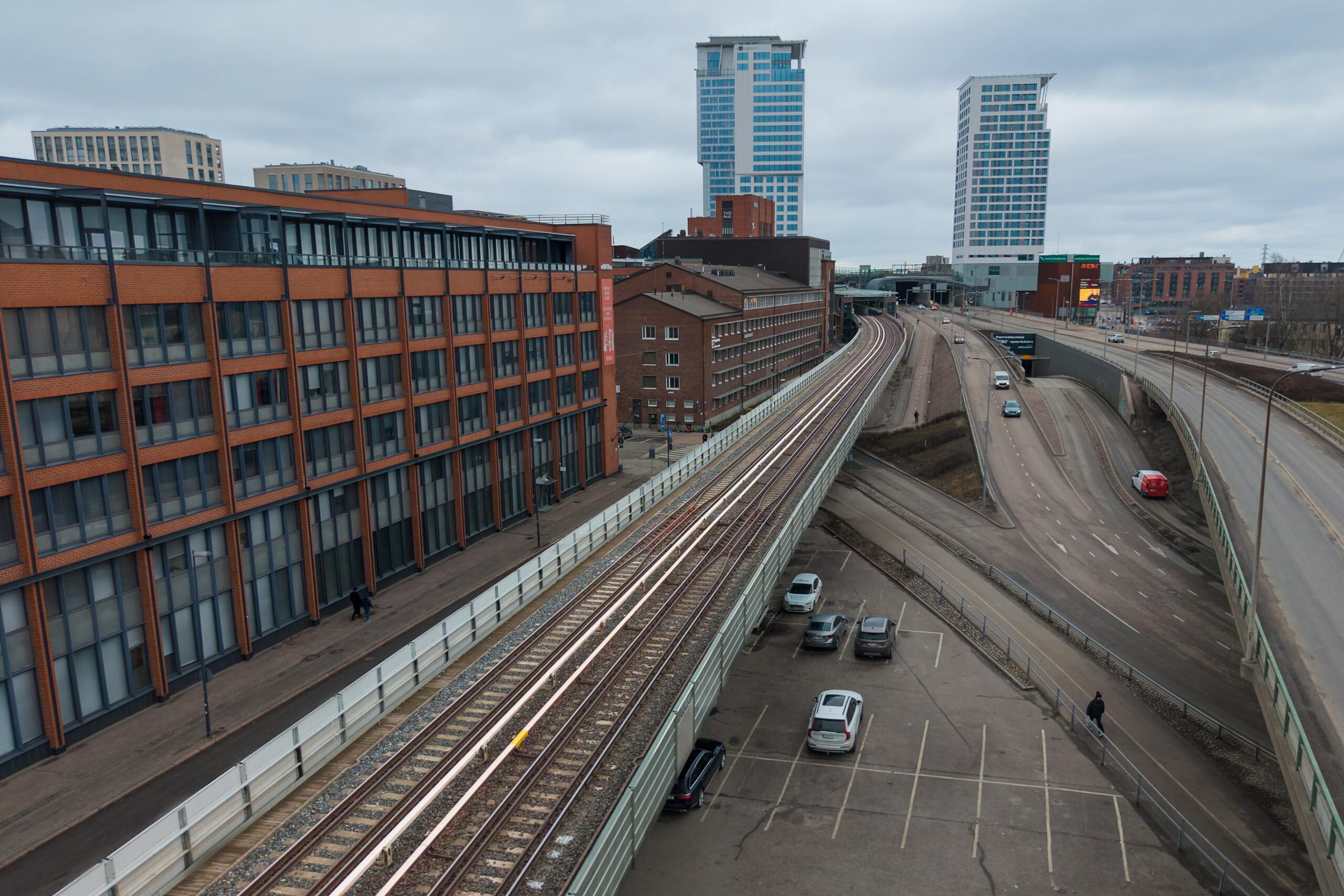
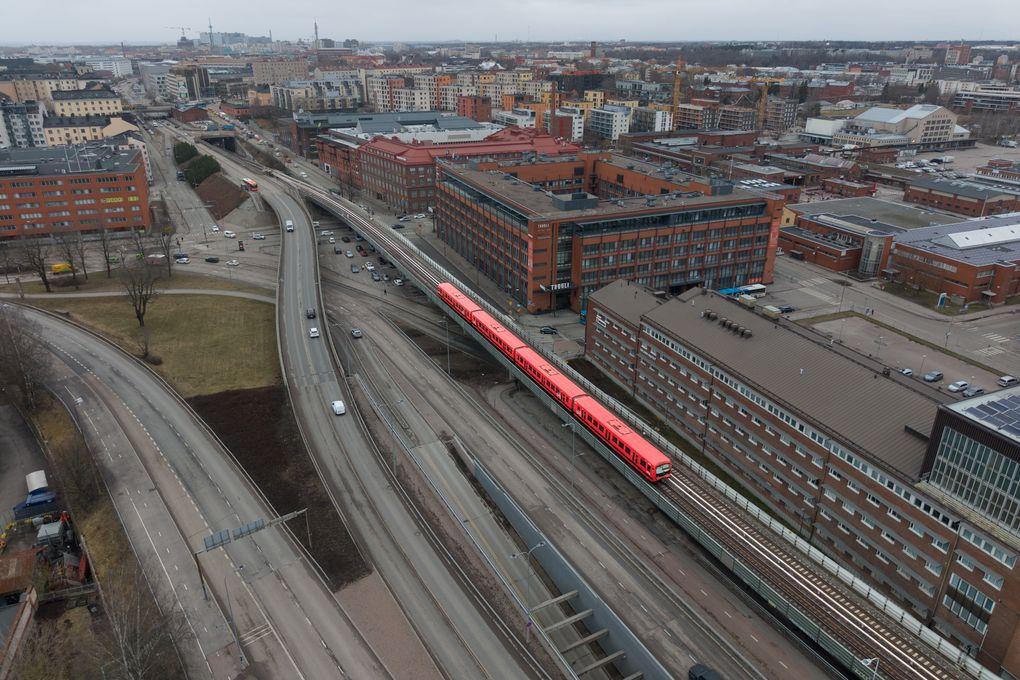
Located between the Sörnäinen and Kalasatama metro stations, the Junatie metro bridge is over 480 meters long, making it the longest bridge on the Helsinki metro line and a critical part of the metro network. The Junatie metro bridge renovation project, which entered the development phase in October 2025, has now moved into the implementation phase following the signing of a contract worth approximately 60 million euros. In this technically challenging project, the old bridge, completed in 1972, will be demolished and replaced with a new, safe, and modern metro bridge.
Construction work on this project, located in a bustling urban environment, has been carefully scheduled to accommodate metro and rail traffic.
“During the development phase, we focused on solutions that ensure mobility for as long as possible, even during construction. Among other things, we plan to use the sliding formwork technique we’ve employed in many previous projects to construct the various sections of the bridge,” says Jari Humalajoki, project manager at Kreate.
The new bridge will be built using two different structural designs
The basic geometry of the Junatie metro bridge, which curves in two directions, will remain the same in the renovation, but the bridge’s structure will change. The old bridge was a concrete box-girder bridge, but for constructability reasons, the new bridge will be built using two different structural designs.
“We are constructing the so-called open section as a prestressed concrete beam bridge, which is divided into four separate sections. As for the new bridge section located near the Kalasatama metro station and within Redi, we will be constructing it as a composite steel box-girder bridge with a concrete deck,” says Humalajoki.
During the development phase, structural solutions were developed and the best options for implementation were identified.
“I am immensely proud of our professionals’ innovative and forward-thinking approach, and I am delighted with the excellent collaboration we’ve had with the client. For a project in such a central location, it is important to find construction solutions that minimize disruption for all parties involved,” says Antti Kokkonen, head of Kreate’s bridge unit.
The innovative approach reduces interference to a fraction of the original level
According to the original plan, Kalasatama station was supposed to be closed for a total of about a year and a half. Due to the construction phase, Kalasatama station will be closed for only a couple of weeks longer than the scheduled closure. We also managed to shave a little over a week off the original schedule for the approximately seven-month shutdown.
Prior to this phase of the project, it was believed that the platforms would also have to be dismantled to replace the bridge deck, as the platforms at Kalasatama station are partially built on top of the bridge that is to be replaced.
“We developed a new solution for demolition work that allows us to avoid demolishing the platform bridges at the metro station almost entirely. The demolition of the old bridge can also be carried out largely without extensive demolition work inside the Redi shopping centre,” explains Humalajoki.
Kreate is constructing the deck structures for the new bridge in several sections alongside the existing bridge. During the metro service suspension scheduled for 2027, Kreate will dismantle the old bridge and install the new bridge sections.
“Our solution also avoids large-scale new construction at the station, which reduces carbon dioxide emissions from construction. This, in turn, supports the project’s sustainability goals,” Humalajoki continues.
Thanks to innovative solutions, disruptions to tram service are also kept to a minimum.
“We are doing everything we can to minimize disruption to passengers, residents, and businesses in the area. We have begun the preparatory work for the project and are now proceeding with the construction of the bridge’s temporary support structures, intermediate supports, and deck structures, all while metro service continues as usual,” Humalajoki assures us.
The actual bridge renovation work and the suspension of metro service are scheduled for 2027. Metro service will resume on the new bridge in December 2027, after which the Kalasatama metro station will open in mid-December.