
The structures of the Kirjalansalmi bridge are unmatched in Finland – this is how this masterpiece was built

The Kirjalansalmi cable-stayed bridge, which opened to traffic in November 2025, is not just impressive. Its pylons, which are over 80 meters tall, rest on massive foundations—the size of apartment buildings—cast into the seabed, and no similar cable-stayed bridge installations have been built in Finland for nearly 30 years. A similar large-scale transition structure, in which steel and reinforced concrete beams are combined, has never been built in Finland. Every step of the process, from load management to rope tensioning, requires the utmost precision, from planning through implementation. This extraordinary bridge has indeed provided Kreate and other leading bridge experts in the country with a unique vantage point.
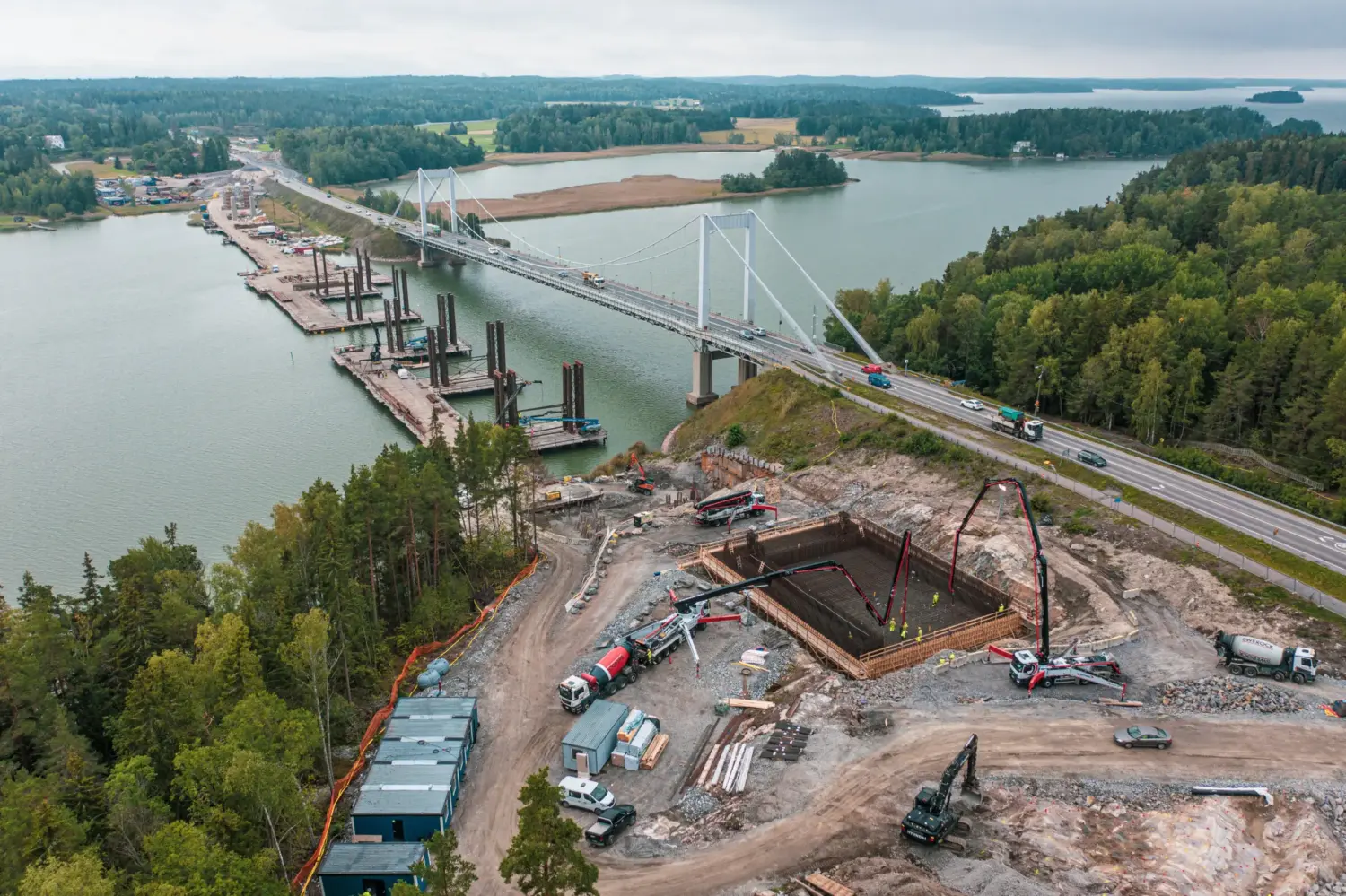
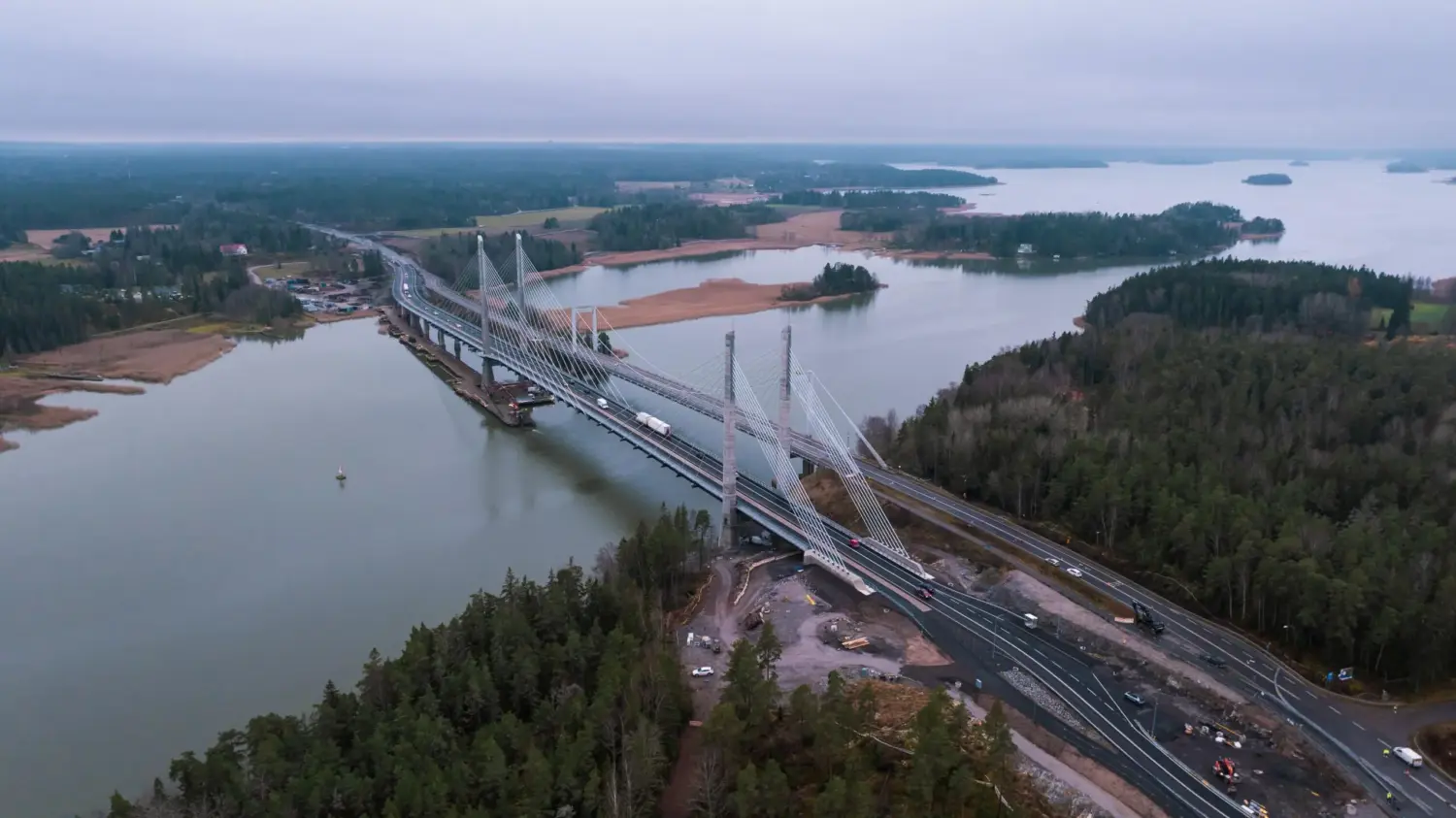
The Mt180 project to replace the Kirjalansalmi and Hessundinsalmi bridges, which began in late 2022, has reached the final stretch. The new Kirjalansalmi Bridge stands majestically against the landscape, stretching 675 meters in length, with its massive pylons supported by bored piles that extend deep into the seabed and sturdy footings. Concrete-encased steel piles, which extend all the way down to bedrock and are concealed within the structures, ensure the stability of the bridge foundations under demanding geotechnical conditions.
“We cast large foundations on top of the piles, optimizing their size and shape for load-bearing capacity and construction efficiency. The lowest parts of the pylon foundations were located below sea level. These structures, known as footings, were cast using the dry-cast method, which improved the quality of the work and reduced risks during construction, says Timo Hirvasmaa, project manager at Kreate, who oversees the project.”
The foundation solution allowed the bridge’s loads to be safely transferred to the ground and provided a durable foundation for the entire bridge structure.
“The pylon foundations and supports were extremely massive and located in a difficult spot. The foundation for just one pylon alone was the size of a 20-meter-tall apartment building. The pylon’s foundations required a huge amount of concrete and steel and pouring them demanded careful planning and quality assurance,” Hirvasmaa explains.
Steel structures installed in stages
One of the most interesting stages was the installation of the steel sections over the water, which required exceptional planning and precise, step-by-step installation. The steel structure of the bridge’s cable-stayed section consists of four massive segments, and the installation method for these segments was selected based on their location and structural requirements.
“During the spring and summer of 2024, we installed the first three sections by launching—that is, gradually sliding them—them onto the pre-built support structures. The sections, each over 100 meters long, slid along the launch ramp at a speed of about 5–6 meters per hour, propelled by hydraulic jacks. Every move required careful shaping, the use of a setting cam, and constant measurement,” Hirvasmaa explains.
At the point where the bridge had its longest span, the steel section was so large and structurally complex that it was not possible to move it using the launching method. For this reason, the block was lifted into place.
“We carried out the lift using two synchronized cranes and installed the block on temporary supports with millimetre precision. Lifts like this aren’t done every day, but thanks to good planning, it worked out.”
The successful installation of the steel sections made it possible to install the diagonal cables and begin the final stages of the bridge’s construction on schedule.

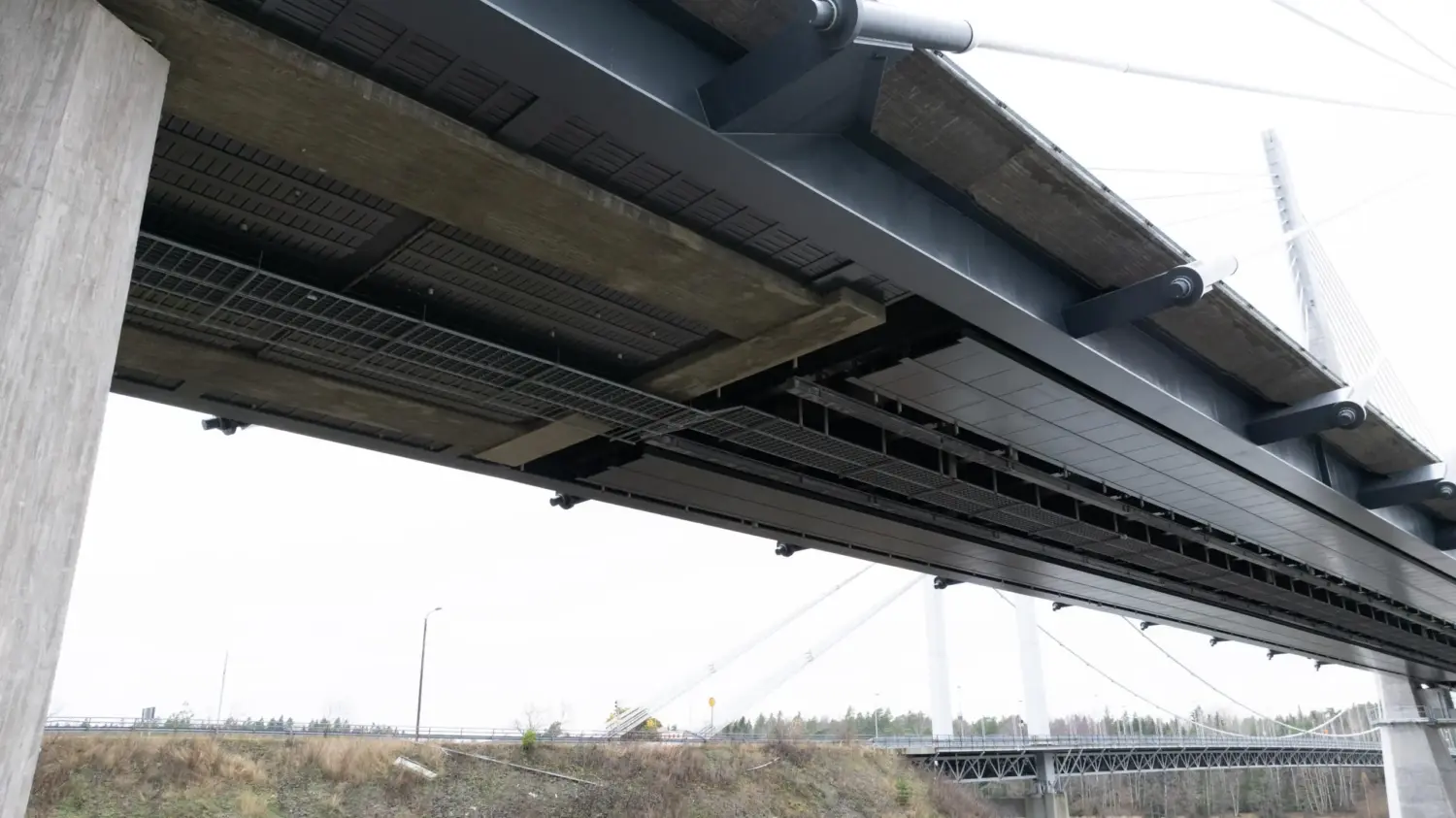
The steel structures were manufactured from a domestic iron-based metal alloy, i.e., structural steel. The structures were delivered to the site on an “as-needed” basis, which kept the construction site tidy and allowed construction to proceed efficiently in phases. In the photo, the mounting lug of the first steel block extends toward the T1 support.
In a rare joint, steel meets concrete
One of the most technically challenging aspects of the Kirjalansalmi Bridge is the connection between the bridge’s steel cable-stayed section and the reinforced concrete approach span. In a structural joint, loads, movements, and deformations interact in structures that behave in completely different ways.
“The connection between the steel and reinforced concrete structures is extremely challenging, and no similar connection has ever been built in a bridge structure of this scale in Finland,” Hirvasmaa explains.
Designing the joint required exceptional precision, as the flexibility and thermal movement of the steel component had to be reconciled with the stiffness of the prestressed concrete structure. At the connection point, loads are transferred in both the longitudinal and transverse directions, and the structure was designed to withstand both the bridge’s own weight and the dynamic stresses caused by traffic.
Diagonal cables ensure the structural integrity of the bridge
Working together with its own bridge professionals and experts from its partner company, Kreate installed 76 diagonal cables on the Kirjalansalmi Bridge. This phase of the work was visually impressive, but above all, it was structurally important and required extremely precise timing. The diagonal cables support the bridge’s deck structure and determine the bridge’s overall shape, load distribution, and long-term behaviour. The installation process, carried out in the spring of 2025, took ten weeks and proceeded one pair of cables at a time, following a carefully planned sequence of tensioning.
“We carried out the installation of the ropes through the collaboration of several teams. Some worked on the bridge deck, some below it, and some 80 meters up inside the pylons—all at the same time,” says Juha Valjakka, the section manager from Kreate who led the cable installation work.
Each rope consisted of hot-dip galvanized wire strands installed inside an HDPE protective tube; depending on the rope, there were between 20 and 58 strands. The strands were tensioned one by one using hydraulic jacks in two stages: first to 70–80 percent of the final tension, and later to full load.
“During installation, we monitored the bridge’s deformations—such as strains, displacements, and stresses—in real time. That’s how we ensured the structure would behave as intended,” Valjakka recalls.
The success of the installation process also required taking temperature fluctuations into account, as the thermal expansion of the steel structure affected the distribution of stresses.
“Installing the cables was a job that required pinpoint precision, in which every single strand affected the shape and structural balance of the entire bridge,” says Valjakka.
The installation of the diagonal cables was a rare and demanding phase of the project—no similar bridges have been built in Finland for nearly three decades—and it brought together the very best of domestic and international expertise.
“During the installation phase, we ensured that the geometry between the elements was exactly as specified in the plans and that the forces at the joints were distributed in a controlled manner. We built a seamless structure in which two different construction techniques come together to form a functional whole. The joint is designed to withstand the test of time, traffic, and weather conditions for decades to come.”

Cable installations were carried out on the Kirjalansalmi Bridge in the spring of 2025. After the cables were installed, the tops of the pylons were constructed using precast concrete elements.
A new design model sped up the construction of the Kirjalansalmi Bridge
The project’s schedule has been extremely tight, as both the Kirjalansalmi Bridge and the Hessundinsalmi Bridge projects broke with traditional practices by adopting an overlapping construction model in which design and construction proceeded simultaneously.
“This model allowed for a significantly faster implementation compared to the waterfall model, in which construction does not begin until the plans are complete,” says Aki Kopra, Design Manager at Kreate, who was responsible for overseeing bridge design on the project.
The alliance model and real-time building information modelling (BIM) laid the foundation for a new kind of collaboration: all parties—from the client to the designers and inspectors—worked based on a shared digital overview of the project.
“We broke the plans down into smaller, work-phase-based packages, which were reviewed step by step. This allowed construction to proceed without delays. Temporary structures and work methods were also modelled, which improved predictability and reduced errors,” Kopra explains.
Although the overlapping model entailed risks, these were effectively managed through open collaboration and continuous information sharing.
“One of the cornerstones of success was the creation of an open, collaborative project environment. As a result, we completed the technically challenging bridge project on schedule and to a high standard. At the same time, we created new operating models for the entire industry to use,” Kopra explains.
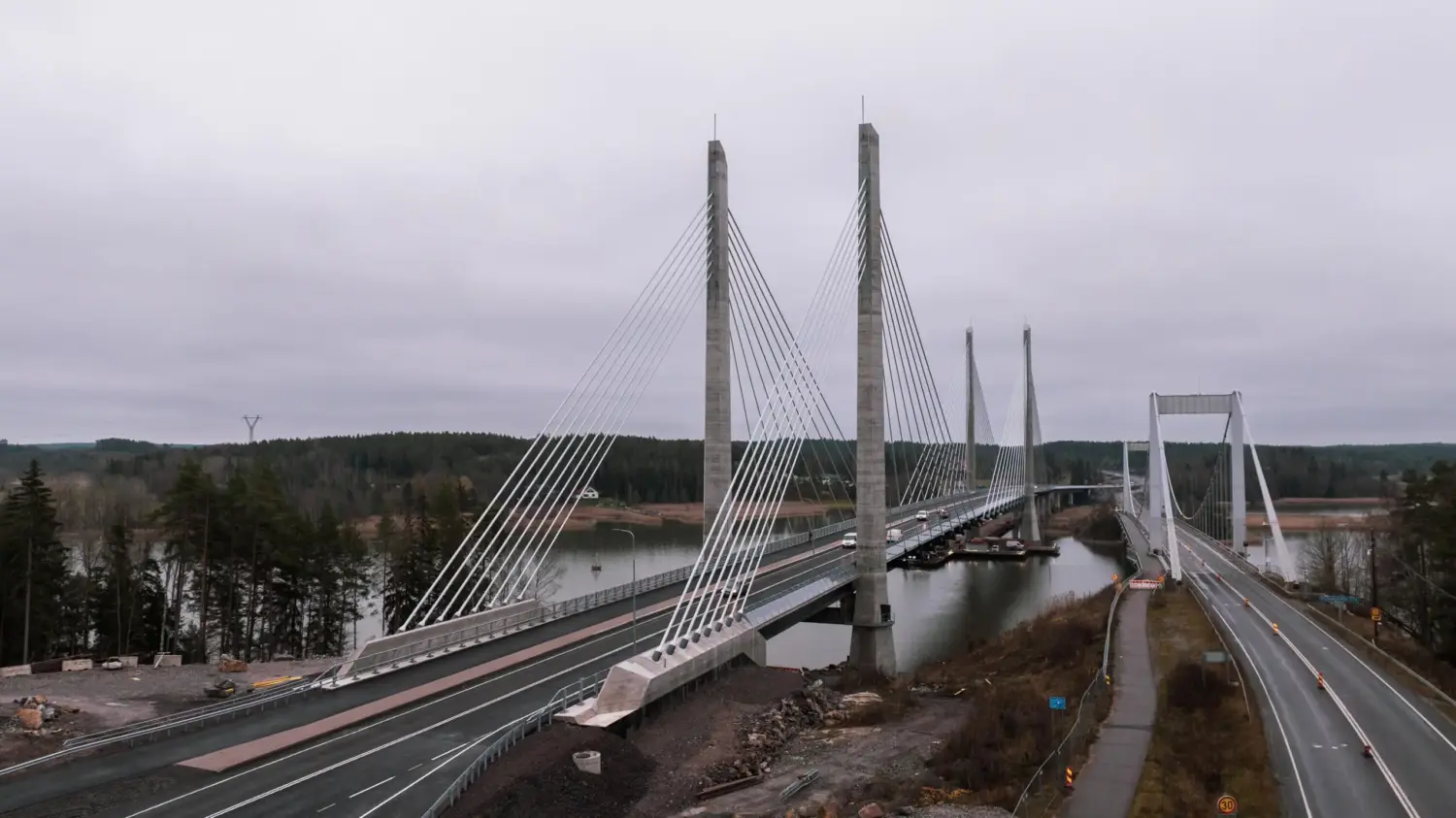
Cooperation and work continue on the old bridge demolition project
The construction of the technically very demanding Kirjalansalmi Bridge also presented challenges along the way, but these were quickly resolved, ensuring the quality of the construction at every stage.
“Cooperation with the Finnish Transport Infrastructure Agency and other parties has been excellent. In the alliance, we’re truly on the same side of the table, and if problems arise, we solve them together. This has been the best possible model for such a complex project,” Hirvasmaa asserts.
“Our collaboration with our alliance partner, Kreate, has gone very well. We were able to make decisions quickly, and our ideas were well thought out even during the development phase. It’s wonderful to see these two magnificent bridges—how they’ve gone from the drawing board to the landscape of Parainen in just a few years,” says Project Manager Saramaria Cowell of the Finnish Transport Infrastructure Agency.
The project is not yet fully complete, as the challenging demolition work on the old Kirjalansalmi Bridge is currently underway. Afterward, Kreate will restore the roadbed in the area to its natural state and revitalize the landscape by planting trees and greenery. The project will be completed by the end of 2026.

Bridge facts in a nutshell:
- Bridge type: The new Kirjalansalmi Bridge is a combination of a cable-stayed bridge and a composite girder bridge. It consists of two pairs of tall pylons, which, with the help of another pair of pylons, support the bridge’s 265-meter-long main span.
- Strategic dimensions of the bridge: The bridge is 675 meters long and has a clear width of nearly 16 meters. The portion designated for vehicular traffic is 10 meters, and the width of the sidewalk and bike path is 5.75 meters.
- Span length: The main span of the Kirjalansalmi Bridge is 265 meters, making it the longest-span bridge in Finland.
- Pylons: The bridge’s pylons rise to a height of over 80 meters, and their foundations are massive, designed to withstand the heavy traffic on Saaristotie and the demanding marine conditions.
- Diagonal cables: The bridge has 76 diagonal cables, the installation of which required special precision and continuous measurements to account for the structure’s movements.
- Steel structures: The steel structures were manufactured in Oulu, and their transport and installation required bespoke work and careful scheduling.
- Junction point: The transition above the fourth support, where a steel beam and a reinforced concrete beam join over approximately 60 meters, is unique in Finland.
- Concrete and Steel: The Kirjalansalmi Bridge contains a total of 3,500 metric tons of structural steel and 26,700 cubic meters of concrete.
- Employment impact: Mt180 Kirjalansalmi and Hessundinsalmi bridge replacement project employed up to 160 professionals at any given time, and a total of 1,545 skilled workers were brought on board for the project.

The new Kirjalansalmi Bridge looks magnificent when it’s lit up after dark.
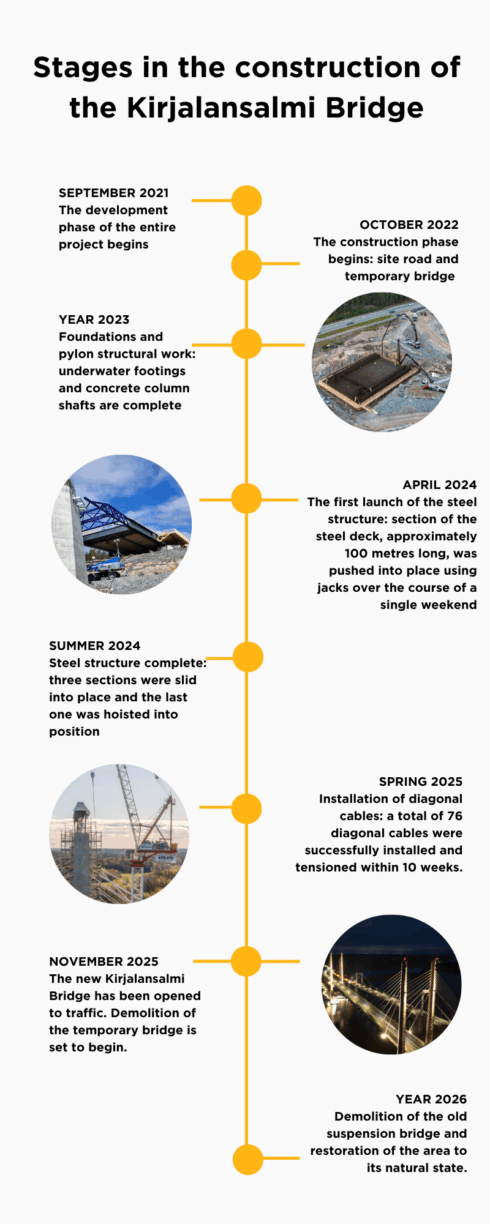
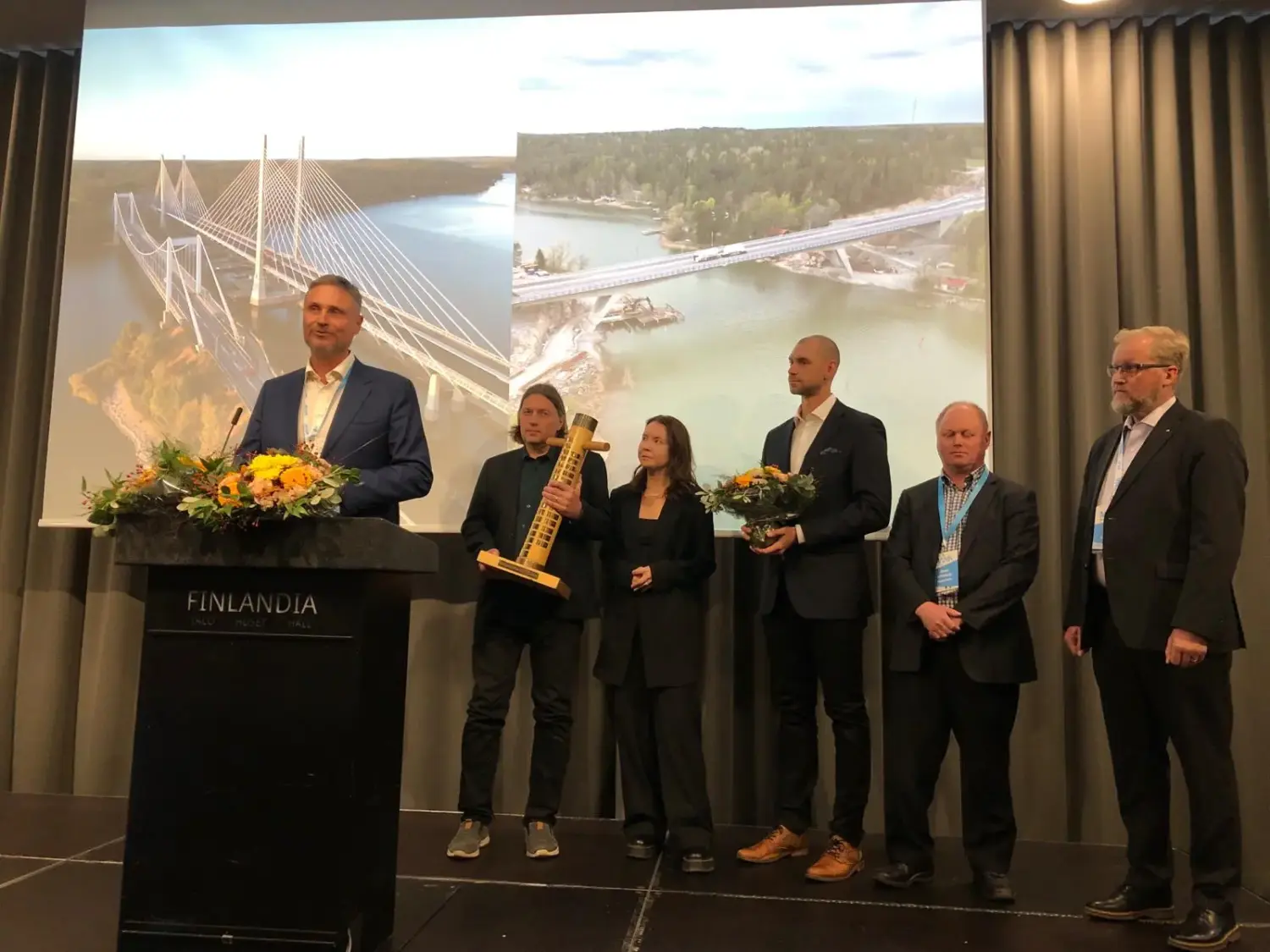

The construction of the Kirjalansalmi Bridge is a Kreatest Hits project. It is our own mark of the fact that the project combines innovation with the courage to do something significant and to drive the infrastructure sector forward.