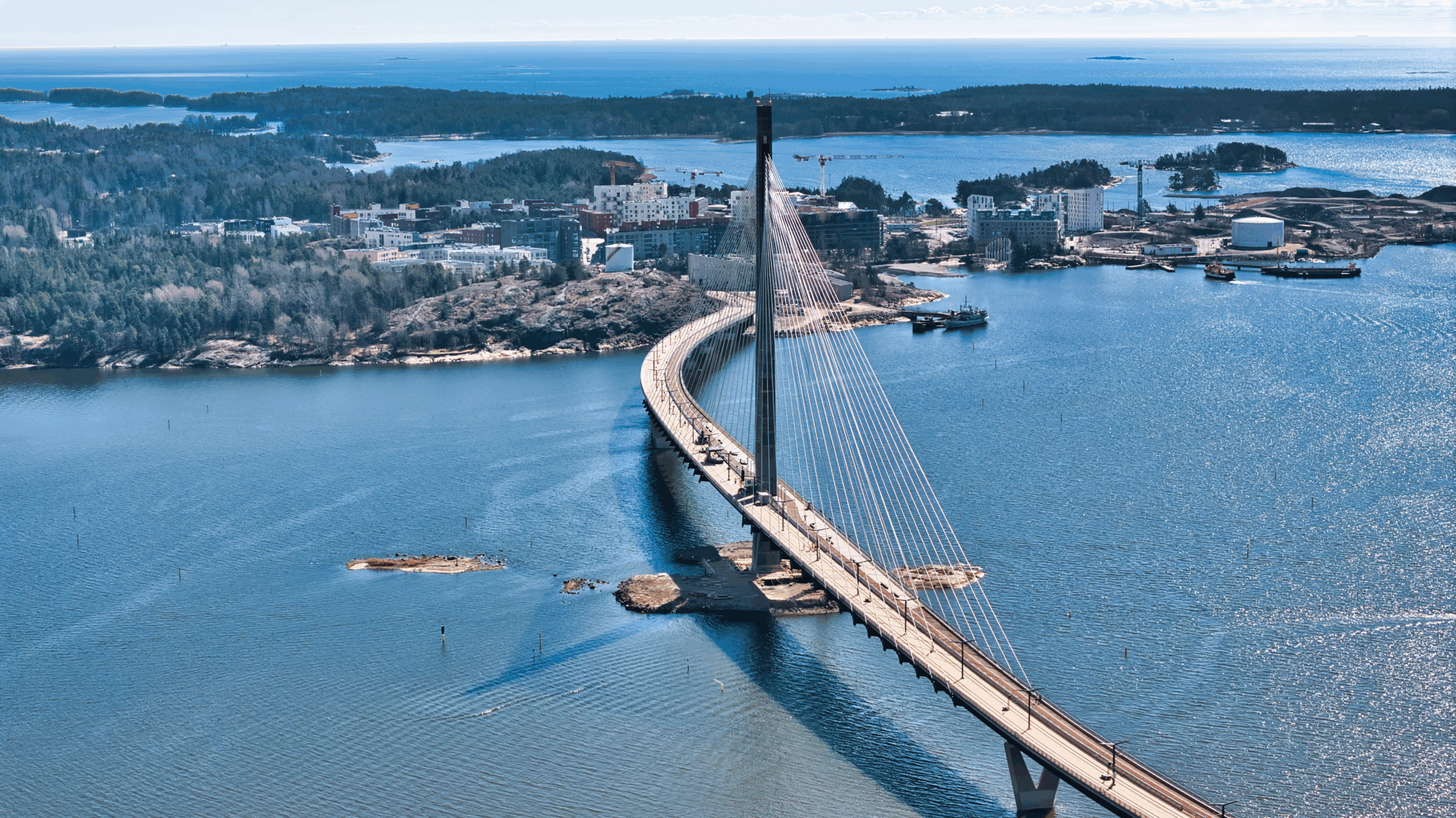
A bridge where nothing is ordinary – the project manager explains how the Kruunuvuori Bridge was built
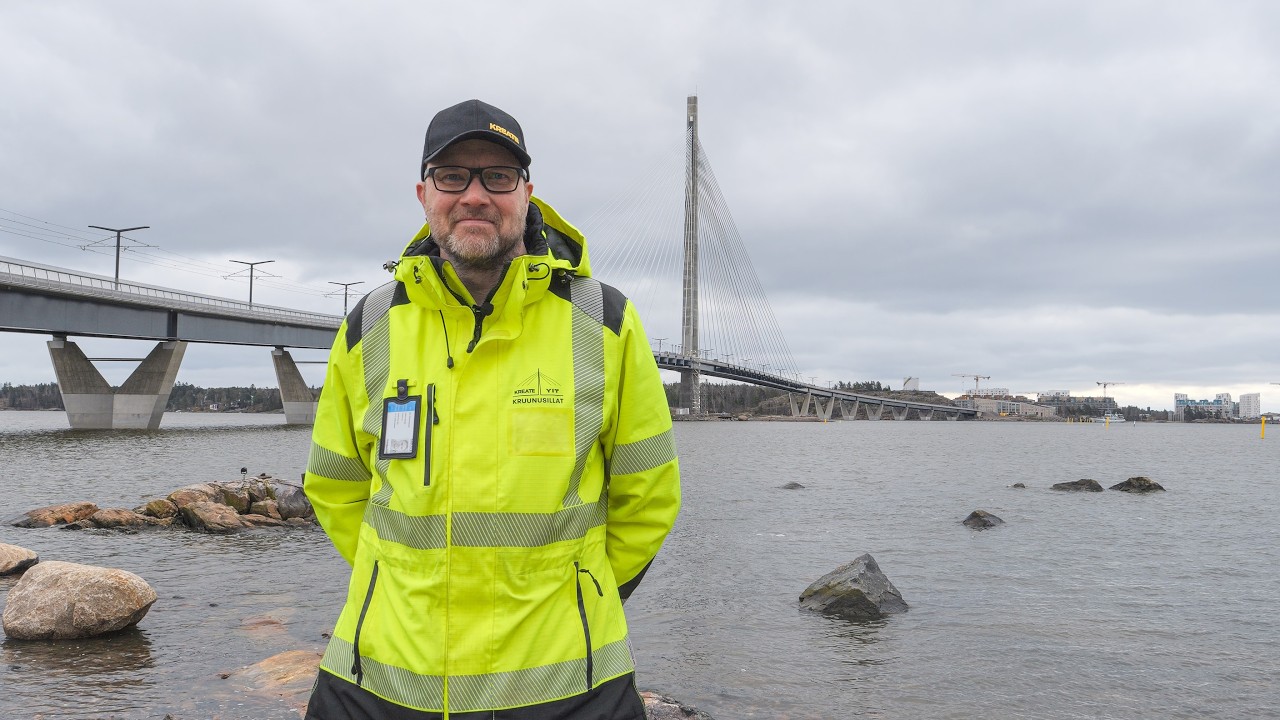
The Kruunuvuori Bridge is more than just Finland’s longest and highest bridge. Helsinki’s new and striking landmark is an exceptionally challenging infrastructure construction project that combines advanced technical design with demanding marine construction phases, such as massive underwater concrete pours and lifting bridge sections from the sea. Project Manager Jari Humalajoki from Kreate explains what it was like to move through the various stages of the project and lead an initiative that culminates in nearly five years of collaboration among experts in the field.
The Kruunuvuori Bridge opened to pedestrians and cyclists in April, and tram service will also begin operating between Korkeasaari and Kruunuvuorenranta later. The Kruunuvuori Bridge, built by TYL Kruunusillat—a joint venture formed by Kreate and YIT—is nearly 1,200 meters long, and its central pylon, which rises to a height of 135 meters, makes it both the longest and tallest bridge in Finland.
For Jari Humalajoki of Kreate, the scale of the project became clear early on.
“When we were in the planning phase in the spring of 2021 on the shore of Korkeasaari and looked across the water toward Kruunuvuorenranta, I felt a bit sceptical. Are we really supposed to build a bridge here?”
Once construction began, however, the uncertainty quickly faded.
“Once we started building and the project moved forward, our uncertainty quickly faded. We regained our confidence that we could pull this off and reach our goal in a systematic way,” Humalajoki recalls.
The project manager’s job was, above all, about managing the big picture, and his days were filled with meetings and emails.
“I tried to visit the construction site as often as possible myself. That way, I was able to stay on top of things and ensure that everything was going smoothly and that construction was progressing as planned. A typical workday for a project manager was a busy day at the office.”
In addition to the technically demanding work phases, Jari Humalajoki was responsible for schedules, costs, safety, and seamless cooperation among the various parties.
“Project management was different in the sense that we operated as a joint venture between Kreate and YIT—in other words, in practice, two companies were in the same boat, working together to carry out the project. Although the client, the builder, and the supervisor share the same goal, it’s easy to view things from the perspective of one’s own role, and we did our best to find common ground. Sometimes it was easier, sometimes harder,” Humalajoki chuckles.
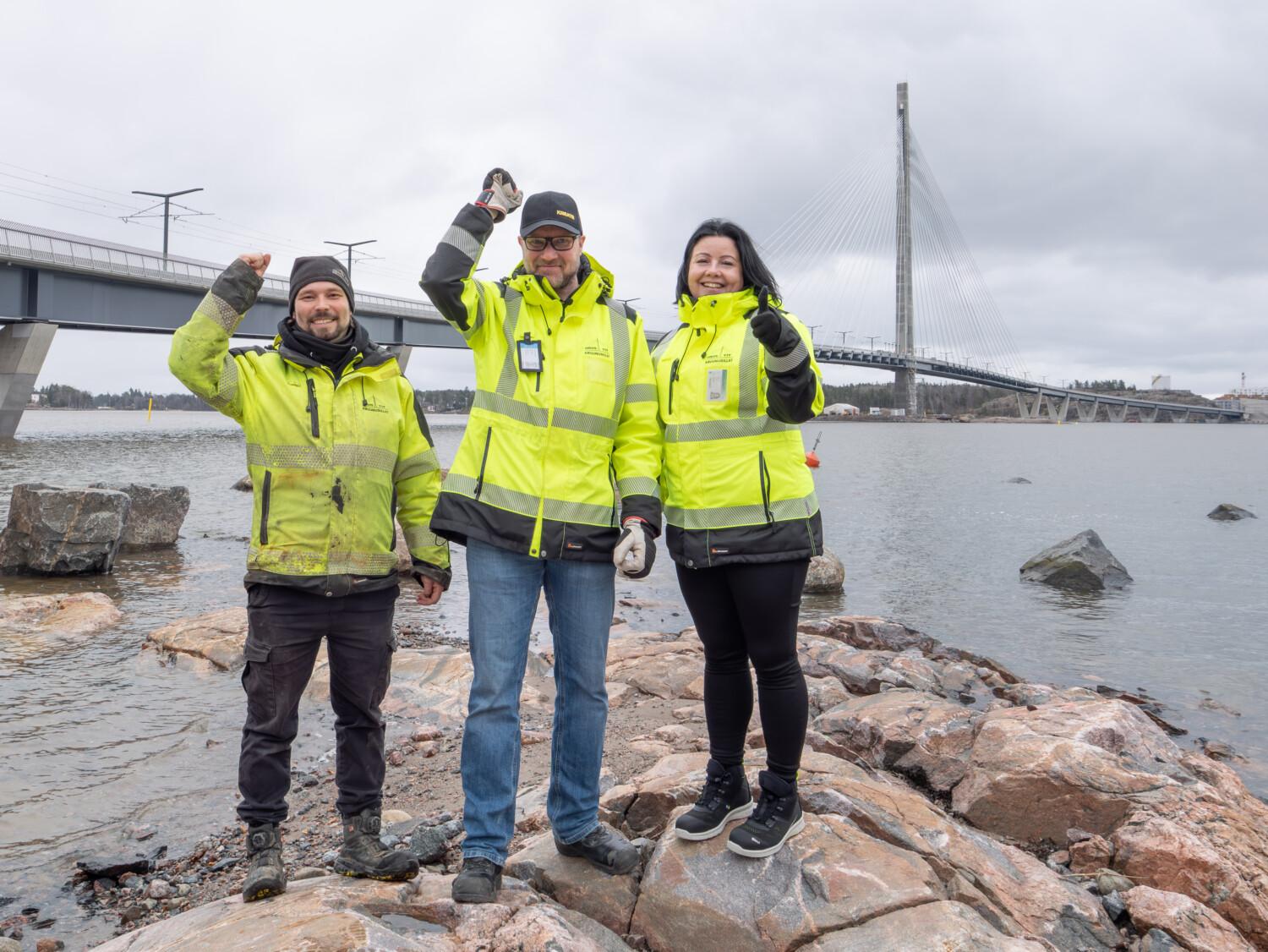
Jari Humalajoki, Venla Ristola, and Jani Rantavuori pose proudly in front of the bridge
Extensive underwater casting and foundation work is one of the most critical phases of the project
Construction of the Kruunuvuori Bridge began in earnest in the fall of 2021. What was the most exciting phase of the project for the project manager personally?
“There have been many exciting phases of work on the construction site, some of which have, of course, been more critical than others. For example, large underwater castings, where there’s no room for error because they’re extremely difficult to repair,” explains Jari Humalajoki.
The result of these construction phases remains invisible to bridge users, but these phases are crucial to the bridge’s success; the foundations for the intermediate supports and the pylon, among other elements, were constructed using underwater concrete pours. Humalajoki says that the longest piles reach a depth of 40 meters and that the foundation of the central pylon is located about ten metres below sea level.
“Thanks to good work planning and advance preparation, we were able to pull them off. We had a professional team here, and we planned and thought things through well in advance,” he says happily.
he says happily.
More than a year of planning culminated in rare bridge section lifts from the sea
In the summer of 2023, another significant milestone was reached off the coast of Helsinki, following more than a year of careful planning and scheduling.
“The Kruunuvuori Bridge project involved work phases not typically found on a standard bridge construction site, such as the lifting of the superstructure from the sea, during which a marine crane was used to lift eight large deck sections into place. That’s extremely rare in Finnish bridge construction,” says Humalajoki, a veteran of dozens of bridge construction sites.
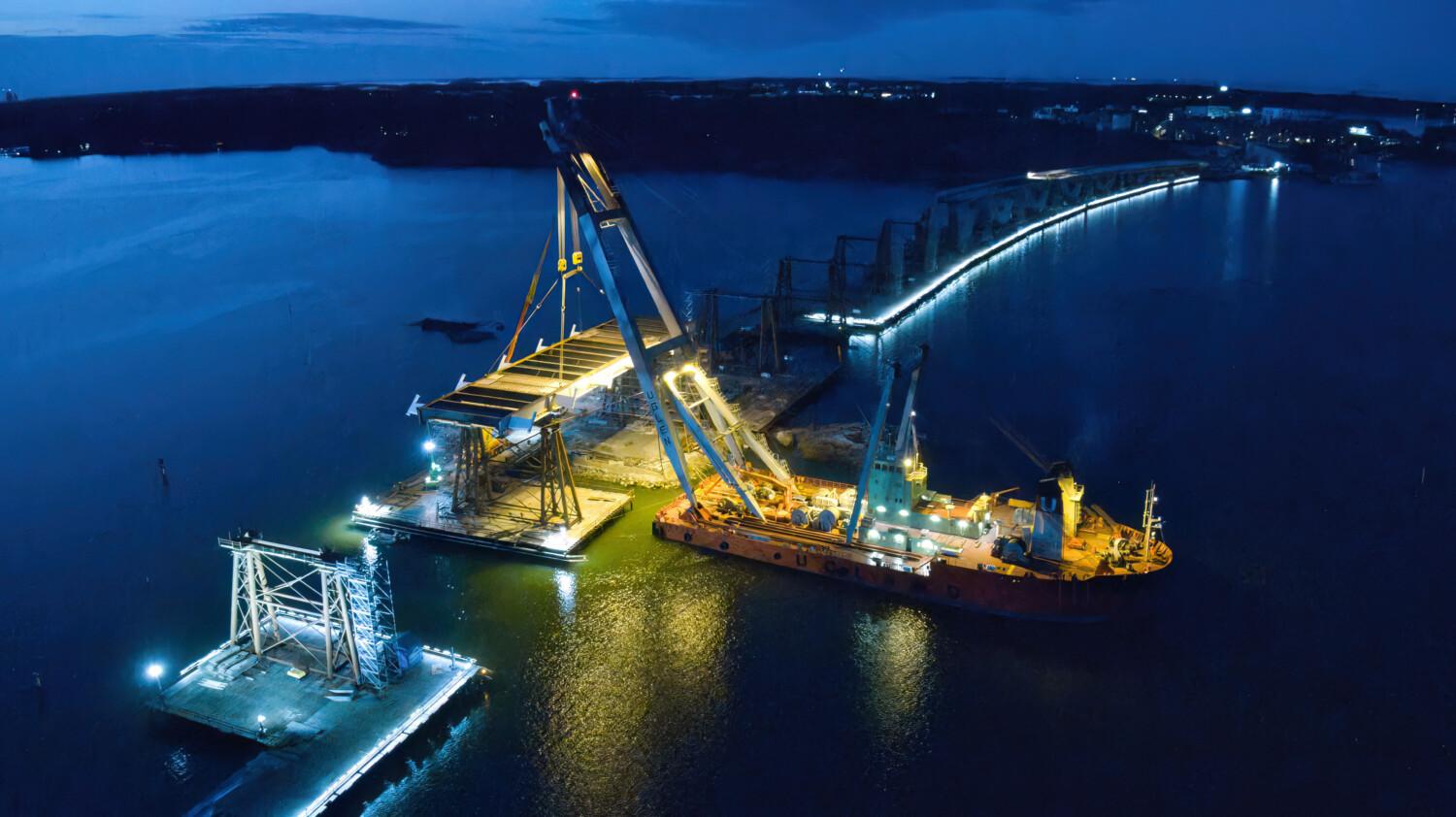
Major bridge lifts in July 2023. Bridge lifts from the sea are rare at bridge construction sites in Finland
The marine crane HLV Uglen arrived from Norway to lift the steel bridge sections for the cable-stayed section of the Kruunuvuori Bridge. About thirty professionals worked for three days and two nights, hoisting bridge sections—some over 72 meters long —longer than the tower of the Olympic Stadium—and weighing 550 metric tons will be placed on top of the bridge’s temporary supports, with four support columns—or pylons—on each side.
A major lifting operation highlighted the importance of planning. Uglen’s 11-person crew visited the construction site a few months before the actual work phase began, and together with our bridge-building experts, they went over all the steps and locations, surveyed the seabed, and marked the rocks.
In the spring, when the water level was still low at the construction site, there were concerns about whether the depth would be sufficient for the demanding lifting operations. Fortunately, the southerly wind brought more rain. If we had had to choose between rain and wind during the lifting operations, rain would have been the lesser of two evils, since winds reaching ten meters or more would have forced us to postpone the operation.’
“It did rain, but we had carefully prepared for major work phases like this. Since it was well planned, it was also easy to carry out. Of course, not every day went as planned, but the major phases of the work went pretty much according to plan,” Humalajoki explains.
The bridge lifts in 2023 (in Finnish)
The challenges of concrete construction were reflected in the solutions and the recognition
The Kruunuvuori Bridge, which connects Korkeasaari and Kruunuvuorenranta, is a composite-structure cable-stayed and girder bridge with a concrete deck. Its distinctive features include concrete solutions and structures that extend from the underwater monolithic castings all the way to the top of the pylon, which rises 135 meters.
“For example, the pylon’s diamond-shaped structure was cast using a climbing formwork system in four-meter casting sections, a method that is very rarely used in infrastructure construction. In addition, the varying cross-sections of the pylon and intermediate supports, along with the dense reinforcement, made the concrete work exceptionally challenging,” Humalajoki reveals.
The concrete structures of the Kruunuvuori Bridge were honoured with the “Concrete Structure of the Year 2025” award. The jury also noted that the construction site was a national pioneer in the management of concrete cooling. Temperature trends were modelled in detail, and the structures were cooled to limit the temperatures of the massive concrete structures.
At the same time, its 200-year lifespan and innovative design have shaped industry practices.
“The complexity of the concrete structures was evident in virtually every phase of the work, and in a project like this, there is no room for compromise when it comes to concrete construction. The construction of the Kruunuvuori Bridge set the bar very high for concrete construction in Finland,” says Humalajoki.
The section of the Kruunuvuori Bridge pylon ranging from 101 meters to 122 meters is called the cable zone, to which the bridge’s diagonal cables are attached. Learn more about the massive cable housings and their installation on the pylon in the fall of 2024. (in Finnish)
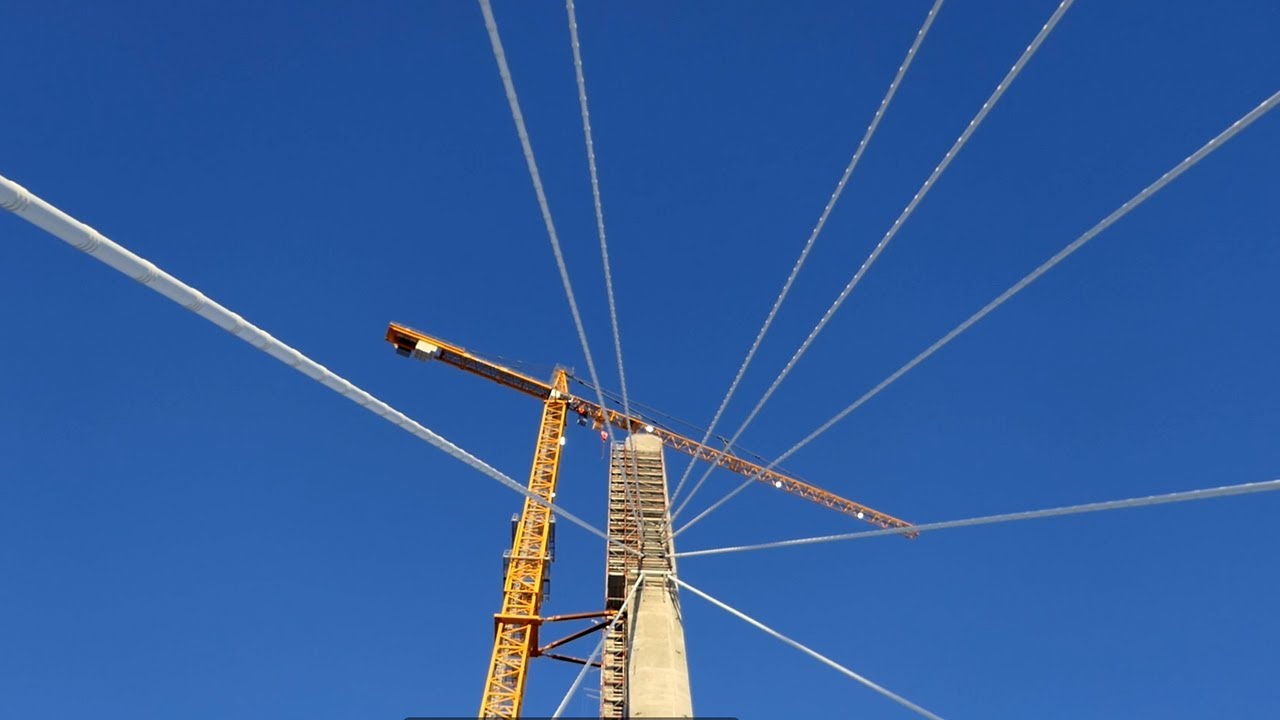
Building Information Modeling (BIM) plays a key role in the design and construction of the Kruunuvuori Bridge
Before its opening in April 2026, Finland’s longest and tallest bridge had already earned other notable accolades. The information modeling for the Kruunuvuori Bridge was named the winner of the Tekla BIM Awards Finland 2024 competition and, later that same year, also won the Tekla Global BIM Awards 2024, where the project was selected as the best BIM project of the year and the winner in the Infrastructure Project category.
The project manager explains that the Kruunuvuori Bridge was designed and built with a strong emphasis on information modeling. Designers, contractors, and the client reviewed the project based on the same up-to-date information, which helped keep the complex project under control and ensure that the various phases of work proceeded in sync.
The complex geometry, large scale, and collaboration among numerous parties required that the entire project remain under constant control, including digitally.
“These awards are, of course, proof that we’ve been doing things right here on the job site and have also been able to help advance the field. These are wonderful tributes that everyone here was proud of. And I’m especially touched by the concrete award. That might prove that there was more here than just a mass of subscribers, and that things were done right,” Humalajoki muses.
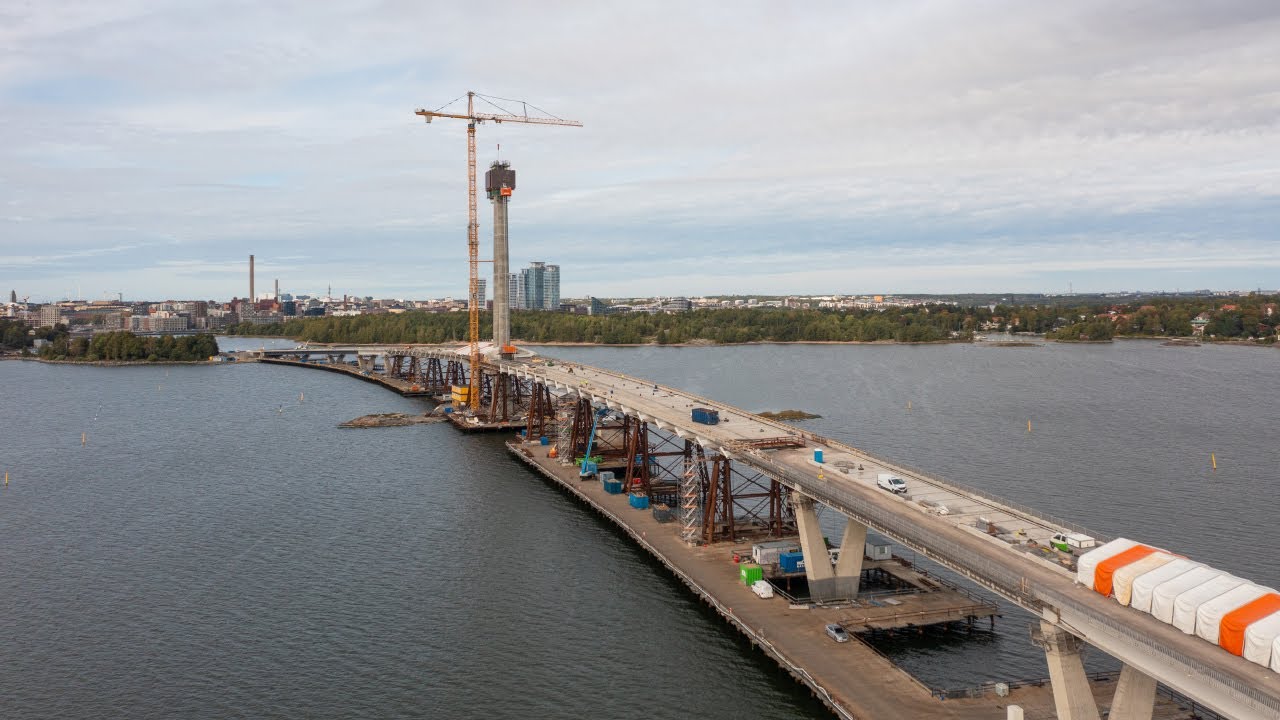
A beautiful bridge is more than meets the eye
The Kruunuvuori Bridge is exceptional not only because of its size, but also because it was built exclusively for public transportation, pedestrians, and cyclists. This makes it unique even on an international scale.
“As far as how the construction of this project was planned during the planning phase, there haven’t been any major surprises or drastic changes to the original concept. The broad outlines remained pretty much the same,” notes Jari Humalajoki.
For its builders, the bridge is a tangible demonstration of what can be achieved through long-term planning, expertise in challenging infrastructure construction, and collaboration among various specialists.
“After working on this for just under five years, we naturally learned a lot of new things. People evolve, and the world evolves. The project has indeed been a long one—and surprisingly difficult, too. This was the first major project of this kind where I served in this role, and through it I’ve grown personally and learned a lot of new things,” the project manager reflects.
The Kruunuvuori Bridge embodies everything that Kreate’s challenging infrastructure construction projects are all about: technical expertise, mastery of marine conditions, systematic execution, and the ability to bring an extremely complex project to a successful conclusion in a controlled manner, in collaboration with other top experts.
The bridge turned out great—even Humalajoki admits that. He says he’s proud to have been part of building the Kruunuvuori Bridge.
“I hope that as bridge users admire this magnificent bridge, they will remember that it is much more than meets the eye. There are many structures underwater that were difficult to construct. And sure, the height of that pylon does create a certain “wow” effect.”
The Kruunuvuori Bridge briefly:
- Location: Between Kruunuvuorenranta and Korkeasaari in Helsinki
- Intended use: Walking and cycling starting April 18, 2026; tram service in 2027
- Length: approximately 1,190 meters, Finland’s longest bridge
- Central pylon: 135 meters above sea level, Finland’s tallest bridge pylon
- Structure type: A concrete composite curved cable-stayed and beam bridge consisting of approach spans and a cable-stayed section
- Longest spans: 260 meters
- Clearance height: 20 meters
- Key technical solutions:
- massive underwater concrete pours at depths of up to 40 meters
- marine lifting of steel sections weighing hundreds of metric tons
- construction of the central pylon using climbing formwork in four-meter pouring sections
- Construction period: For Kreate, 2021–2025
Key parties
- Client: City of Helsinki / Urban Environment Division
- General Contractor: TYL Kruunusillat, a joint venture between Kreate and YIT Infra Oy
- Project Manager: Jari Humalajoki, Kreate Oy
- Design Consultant: Sitowise Oy
- Designer: WSP Finland Oy
- Project Management and Supervision: HTJ Oy
Awards
- Concrete Structure of the Year 2025 for exceptionally challenging concrete solutions, quality, and technical execution
- Winner of the Tekla BIM Awards Finland 2024 competition, as well as the international Tekla Global BIM Awards 2024 competition, where it was named the best BIM (Building Information Modeling) project and the winner of the Infrastructure Project category